
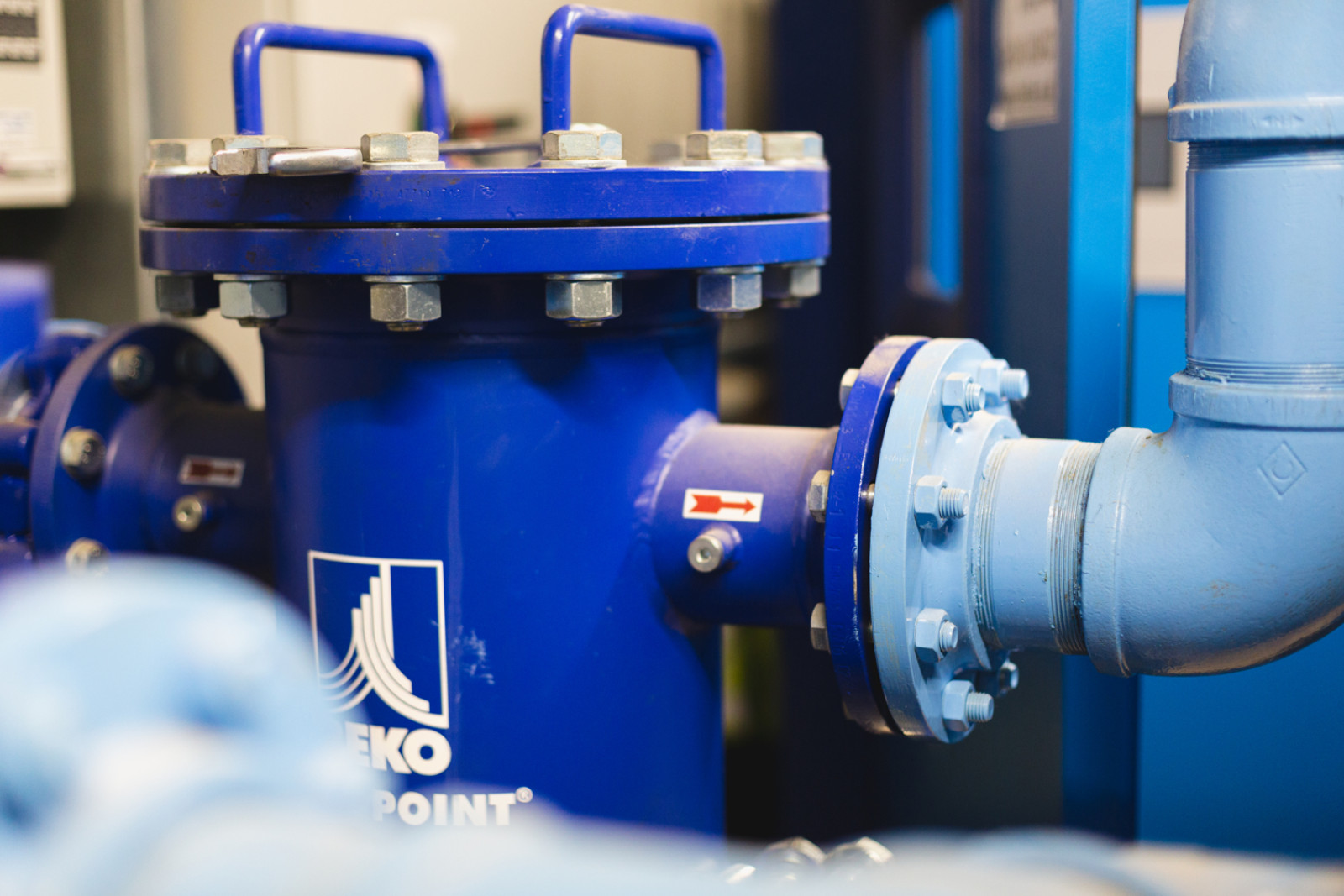
Hidden issues can often go unnoticed until efficiency, reliability, or product quality are affected.
On the surface, many compressed air systems seem to be performing well.
They’re running, production is ticking over, and nothing seems obviously wrong.
But when you look a bit closer, that’s usually when issues start to show up.
In food, beverage, and pharmaceutical environments, these issues don’t just affect efficiency. They can impact product quality, compliance, and audit outcomes.
Across a lot of sites we visit, the same problems come up time and time again. Not because equipment has failed, but because parts of the system haven’t been set up or reviewed properly.
Here are three of the most common.
1. Incorrect or Poorly Maintained Filtration
Filtration plays a critical role in controlling contaminants within compressed air systems.
After compression, air still contains particles, moisture, and oil. If filters aren’t specified correctly, or not maintained, those contaminants pass straight through to the point of use.
In regulated environments, that can lead to:
- contamination of product or packaging
- failed audits or non-conformance
- unnecessary risk to quality processes
We often see systems where filtration doesn’t match the application, or where filters have simply been left in place too long.
Filtration isn’t something to install and forget. It needs to be reviewed regularly to ensure it’s still doing its job.
2. Using the Wrong Dryer for the Application
Moisture is one of the most common issues in compressed air systems.
Dryers are there to control it, but they’re not always selected with the application in mind.
Different processes require different dryers. If the dryer isn’t suitable, or if operating conditions have changed, moisture can start to build up.
That’s when you begin to see:
- water in pipework
- corrosion within the system
- increased risk of contamination
It’s worth checking whether the dryer still matches the requirement, rather than assuming it’s doing the job.
3. Not Testing Air Quality
This is probably the most common issue.
Many systems are installed and serviced regularly, but the air quality itself is never actually measured.
Instead, it’s assumed that everything is working as it should.
In industries where air comes into contact with product, packaging, or processes, that’s a risk.
Without testing, you don’t know:
- what level of contamination is present
- whether your system meets required standards
- how it would stand up in an audit
Testing against ISO 8573 standards gives a clear picture of:
- particle levels
- moisture (dew point)
- oil content
It’s often the first step in understanding whether a system is performing as expected.
Bringing It Together
Filtration, drying, and testing all work together.
If one part isn’t right, it affects everything downstream.
The systems that perform reliably over time are the ones that are:
- correctly specified for the application
- properly maintained
- and regularly tested
If your compressed air system hasn’t been reviewed recently, it’s worth taking a closer look.
In many cases, the issues aren’t obvious until they start to affect quality or compliance.
And by that point, they’re harder to ignore.